Bakery Line Transfer Stage Guide

Bakery Conveyor – Line Transfer Stage

Bakery Line Transfer Stage Guide

Most conveyor decisions start with a position on the line, not a product name. This guide maps a bread, toast or pastry line from the oven mouth to the packing table and asks the same question at every stop: what does the product need here, and what has to be true of the bakery conveyor that carries it? It is written for plant managers, production engineers and line integrators who already know which transfer point is causing trouble and want to match a unit to it with confidence. The same reasoning holds whether the run is hot from the oven or already cooled, and it applies to any food processing conveyor that has to hand product on without damage.

food-grade stainless steel conveyor belt for bakery production line
modular plastic belt conveyor for baking and cooling applications
industrial food handling conveyor system for cakes and pastries

Start here

Find your stage before you choose a unit

A line position is simply where a transfer happens and what the product is doing when it gets there: still hot and soft from the oven, setting as it cools, fully cooled and waiting to be sliced, open-faced under a depositor, or finished and ready to pack. Two lines of the same length can need very different conveyors because of that difference alone. Pick the transfer point you are fixing and go straight to its requirement row.

Reference

Stage requirements at a glance

Four columns, six rows. Read across a row to see why a conveyor that works beautifully at one point can be the wrong unit twenty metres further down the line.

Stage Product condition at this point What the conveyor must do Common failure here
1 · Oven exit Hot, soft-crusted loaves or pastries straight from the oven; constant stream; product still deforming easily. Heat-tolerant running surface, minimal drop at the hand-off, speed matched to oven discharge, a straight run with no tight transfers. Crushing or marking where hot product drops onto a faster belt; a stationary belt standing under the oven mouth.
2 · Cooling Warm and fragile; crumb still setting; the longest dwell time on the line; ambient air movement. A long, level run with open sides for airflow, a steady speed that gives a predictable cooling time, a surface that is quick to clean. Crumb and condensation building up along the run; uneven cooling when speed is changed mid-shift.
3 · Slicing infeed Fully cooled loaves arriving in single file at a tight pitch; alignment matters more than speed. Speed modulation to synchronise with the slicer feed, a centred lane, a smooth transfer with no gap for the loaf to skew on. Toast arriving skewed, so slices come out uneven or the loaf jams at blade entry.
4 · Filling & sprinkling Open surface carrying filling or loose topping; sticky contact area; product must stay registered under the depositor. Consistent speed under the head, a surface that releases sticky product, working height set to the depositor line. Topping drift and mis-registration when speed wanders; product sticking and rotating on the belt.
5 · Outfeed Sliced stacks or topped product; light and easy to tip; a short run into the next machine or a tray. Height matched to the machine being left, a gentle transition, a compact footprint that fits a tight aisle. Stacks toppling at a height mismatch or at a step between two machines.
6 · Packaging Finished, sliced or bagged product moving at full line speed into the packing module. Discharge speed timed to the packer, cleanable food-grade surfaces, straightforward controls an operator can adjust. Back-up when the packer runs slower than the line; jams at a discharge that is not aligned.

The building block

Conveyor Belt HS, the unit behind each stage

Model HS is a single stainless steel conveyor built to slot into whichever transfer point you are fixing. These are the published details, with no additions.

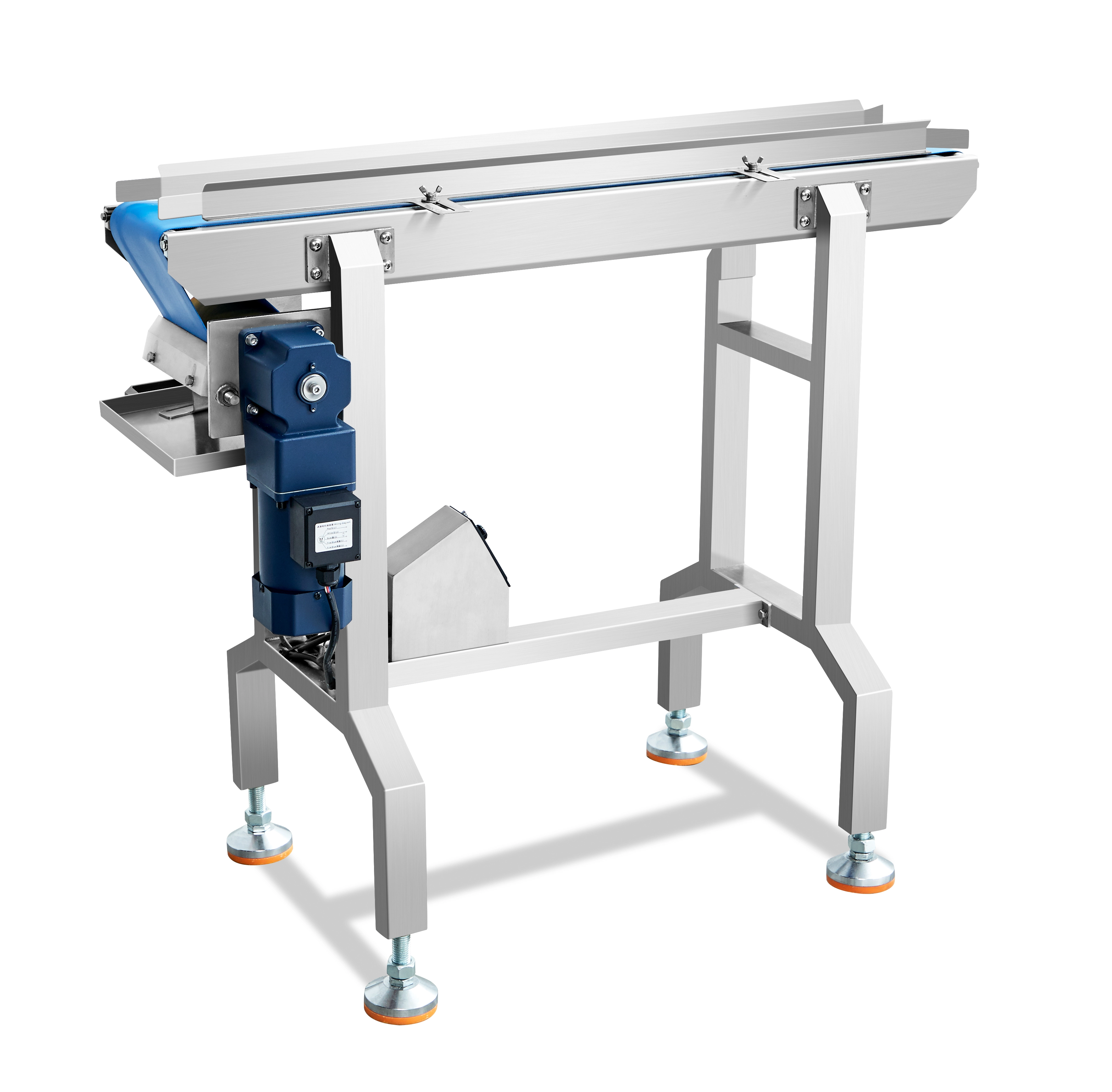
Conveyor Belt HS stainless steel frame with belt surface and drive area
Conveyor Belt HS — stainless steel construction, available in various sizes to meet customer requirements.
  • ModelHS
  • Size1500 × 500 × 900 mm
  • Power0.12 kW AC motor
  • VoltageAC 220 V
  • Weight30 kg
  • SpeedAdjustable
  • HeightAdjustable
  • FrameStainless steel, laser cut & welded
  • SetupStandalone or line-integrated
  • Stainless steel frameLaser cut and laser welded for structural integrity under continuous operation; wear and tear resistant, compliant with food safety standards and easy to clean.
  • Belt surfaceThe running surface carries baked goods between processes. Confirm the belt specification for your product and stage when you request a quote.
  • Motor and drive areaA 0.12 kW AC motor on a 220 V supply drives the belt, with adjustable speed set through straightforward controls.
See the full Conveyor Belt HS specification

Stage fit

One unit, several stages

Adjustable speed, adjustable height and a modular frame mean the same conveyor can be matched to more than one transfer point. Here is how that plays out in practice, and where a standard configuration should be reviewed instead of assumed.

Stages 1–2

Oven exit and cooling

Height adjustment lines the belt up with the oven discharge, and speed adjustment lets the run be slowed to the pace the product can take while it is still soft. The compact 1500 × 500 mm footprint keeps the run tight where floor space is short.

Stage 3

Slicing infeed

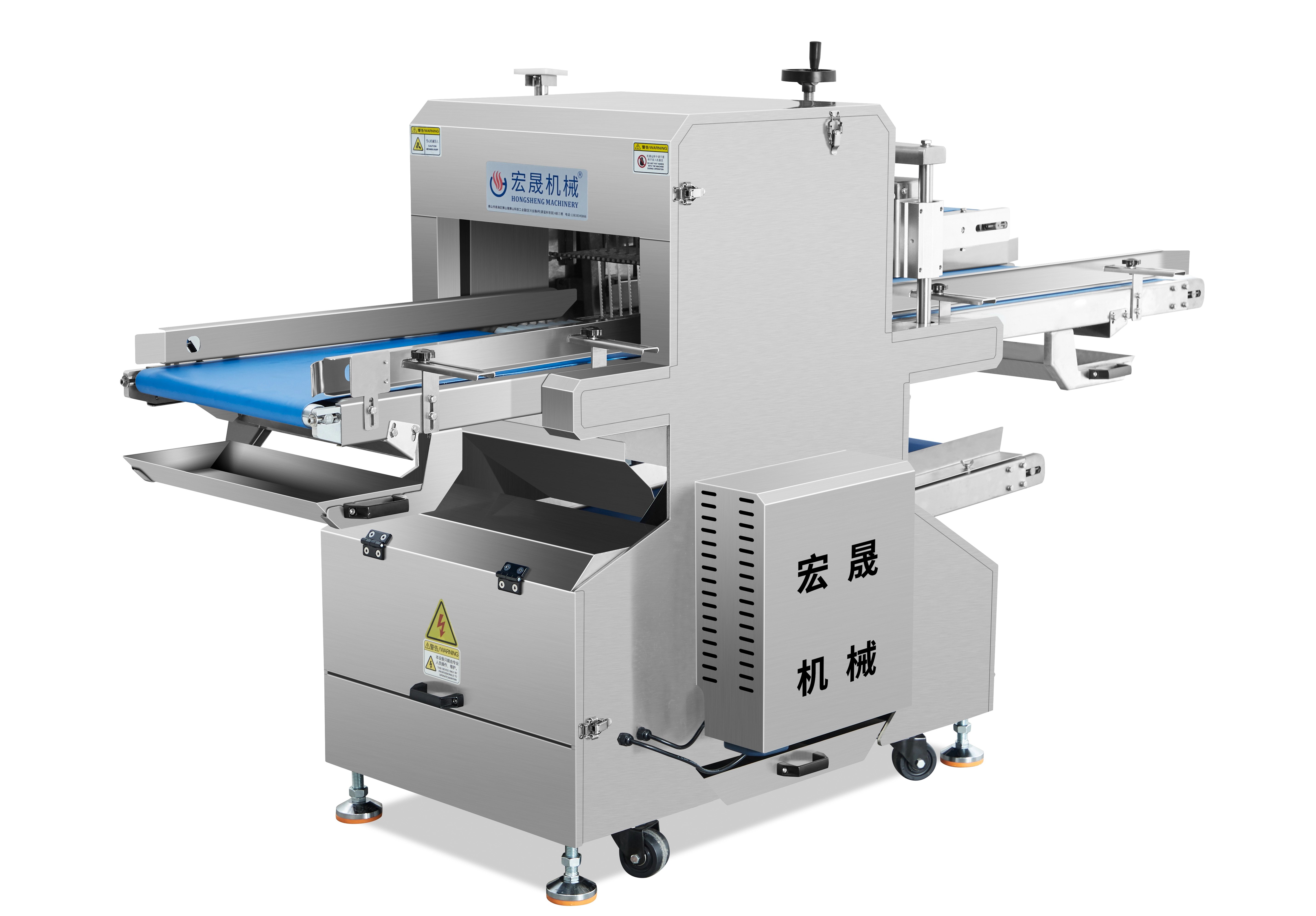
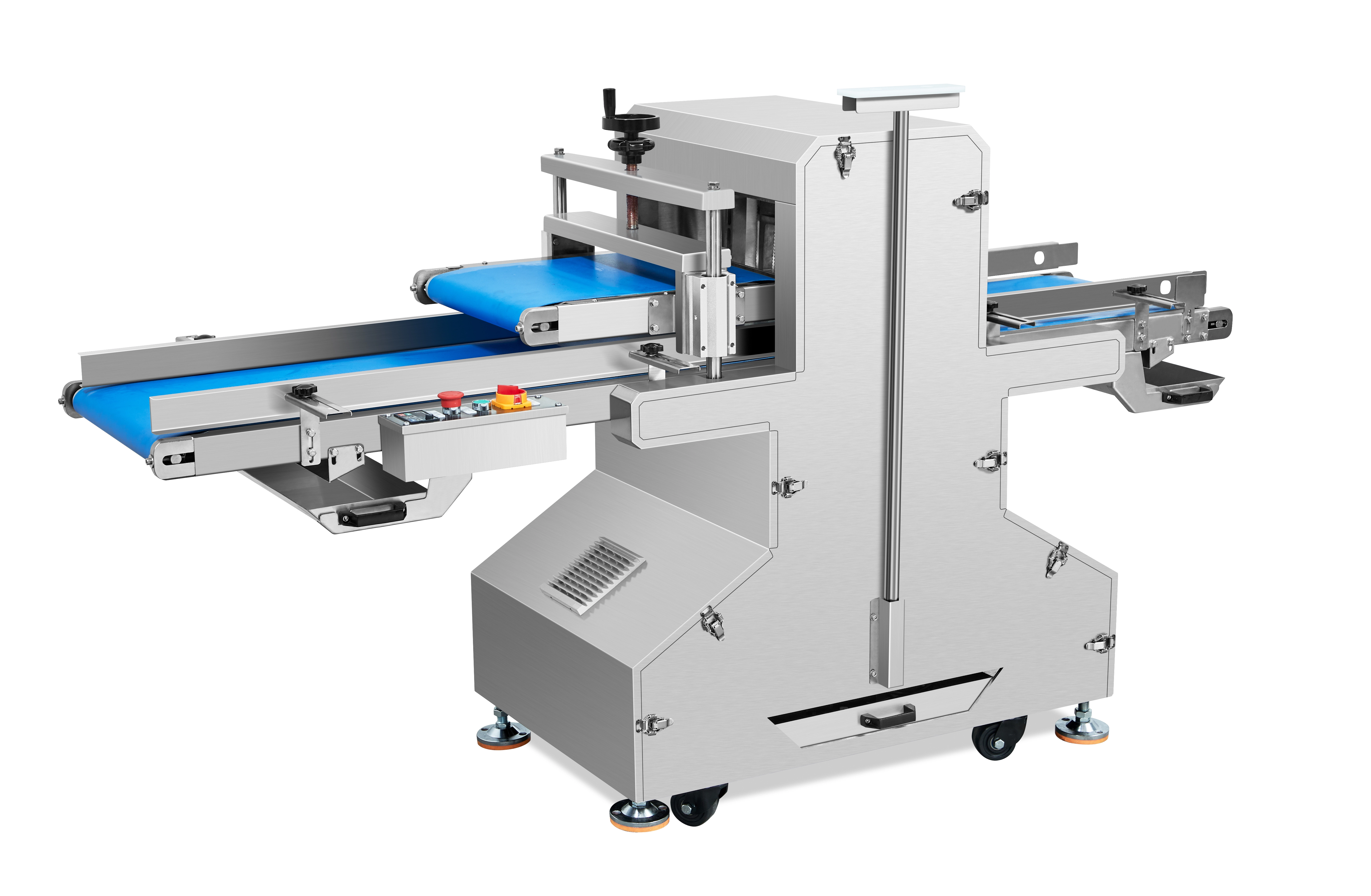
The published speed modulation supports synchronisation with bread slice feeding system modules, which is the practical requirement at a slicer entry. Where a line needs lane guidance or a specific alignment device, raise it during the quote rather than assuming it is included.

Stages 5–6

Outfeed and packaging hand-off

The modular stainless steel frame allows quick assembly and adaptation to a changing layout, so a unit can be repositioned as the end of the line is rearranged. Controls stay simple enough for operators to adjust speed at the packing hand-off.

Review needed

Long runs, inclines and special products

A 1500 mm standard length suits a single transfer. A long cooling run, an incline, an unusual product footprint or a belt requirement that differs from the standard build all need to be discussed with engineering before ordering — the page states the conveyor is available in various sizes to meet customer requirements.

Next step

Which stage are you fixing?

Two routes cover almost every enquiry. Choose the one that matches the scope of the work, then send the details below with your request.

One transfer point to fix

You already run a line and one hand-off is costing you product, time or labour. A single unit is the answer.

  • Choose the stage from the map and note the machine on each side of it.
  • Confirm the working height at both ends — the HS height is adjustable.
  • Confirm site voltage matches the published AC 220 V supply.
  • Ask for the belt specification that suits your product at that point.

A line to build or extend

You are arranging several transfers together, or linking a new conveyor into existing equipment. Scope matters more than a single dimension.

  • List every transfer point and the throughput at each one.
  • Note where the line changes direction, height or speed.
  • Flag any non-standard length, run or belt requirement for review.
  • Confirm whether units will be standalone or integrated into one line.

Request the latest quote

Send the transfer point, product type and condition, throughput in loaves or kg per minute, the height and speed of the machines either side, available floor space and site voltage. Sizes can be customised to specific space constraints or production capacity needs.

Email sales@honsunbakerymachine.com · Phone +86 13326711041

Related Reading

Three notes to help clarify product requirements before contacting the supplier.

How Bread Slice Feeding Conveyors Keep Toast Aligned Before Slicing

A pre-slicing conveyor is an alignment and pacing tool, and matching speed, guide position, and height decides whether toast reaches the blade square.

Read article

Conveyor Belt Selection for Oven to Slicing Station Transfers

An oven-to-slicing upgrade depends on matching conveyor speed and height to both machines and confirming voltage and layout before the build.

Read article

Custom Bakery Conveyor Sizing for Nonstandard Line Layouts

Custom bakery conveyors are specified by the gap an existing line leaves behind, so the practical work is translating nonstandard workshop space, machine interface heights, and line rhythm into…

Read article

Frequently Asked Questions

what information is shown for this product?

review the product details, images, and specifications presented on the official product page.

where can i check the intended application?

use the application and use-case information published on the official product page.

which specifications should i confirm before ordering?

confirm the specifications and options listed for the exact product variant before placing an order.

where can i check available options?

check the official product page or ask the supplier about options shown for the selected product.

how can i request product information?

use the official contact or inquiry path provided on the site.

what should i include in an inquiry?

include the product page, intended use, required quantity, and any specifications you need the supplier to review.

Message Us